
The Back Shelf Series
History doesn’t just live in our minds — it lingers as an aftertaste in our mouths.

I still remember sitting in Intro to Gastronomy at the CIA.
The professor said something that burrowed deep into my brain:
“If you want to understand history, follow ingredients.”
I didn’t fully grasp it at the time — but something clicked.
Something ancient. Something urgent.
And ever since, I’ve been paying closer attention.
Before borders,
Before flags,
Before kings, presidents, and empires—
There were ingredients.
Waiting quietly.
Hidden in dirt, bark, resin, sap, leaves, stones, pods, caves, and seawater.
Waiting for hands — curious, desperate, devout — to find them.
To use them.
To kill and trade for them.
To build with them.
To steal them.
To store them.
On some back shelf, far from the line.
Forgotten — until now.
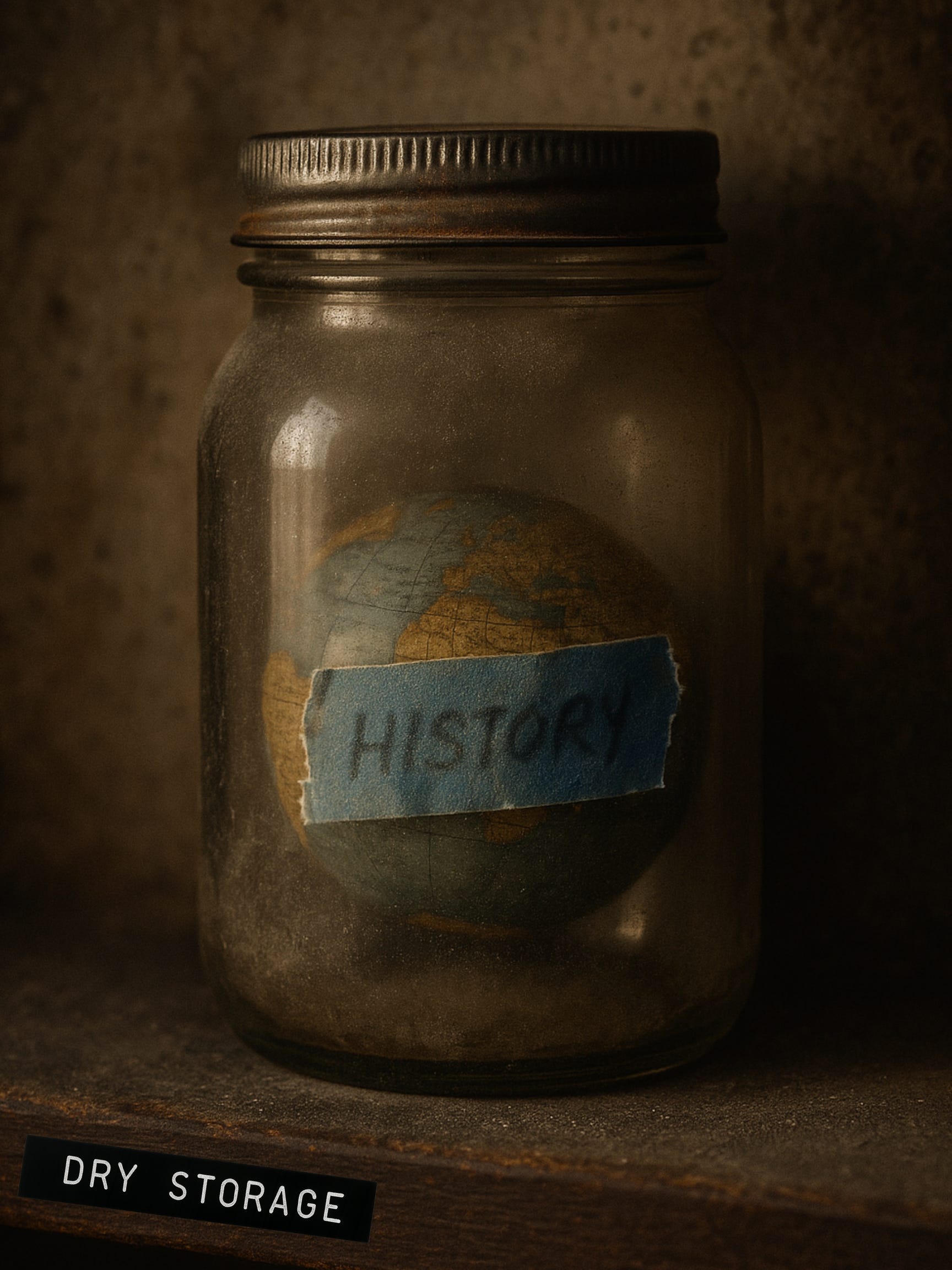
In real kitchens, the back shelf is where forgotten things go.
Half-labeled jars.
Dusty spices.
Ingredients past their prime — or waiting for their moment.
You don’t reach for them in the heat of service...
But when you finally do, they can change the whole dish.
So what is this?
A collection of essays — or whatever these turn out to be.
Part food anthropology.
Part personal archaeology.
Part scientific explanation on an ingredient’s use in the kitchen… and far beyond it.
Each one starts with an ingredient.
But it never ends there.
We’ll trace how it traveled the world — in caravans and caravels.
We’ll pull it from dusty sacks in kitchen corners and ancient trade ledgers.
We’ll taste the wars it fed, the empires it bankrolled, the borders it blurred.
And maybe, by the end, you’ll see that what’s in the pantry
has always shaped what’s on the plate —
and who gets to eat.
Because ingredients remember.
Even when we forget.
Coming right up: Salt.
Then?
Corn. Cacao. Coffee. Sugar. Chilies. MSG. And more…
What else is hiding back there — waiting for their chance to tell us what they’ve witnessed?